
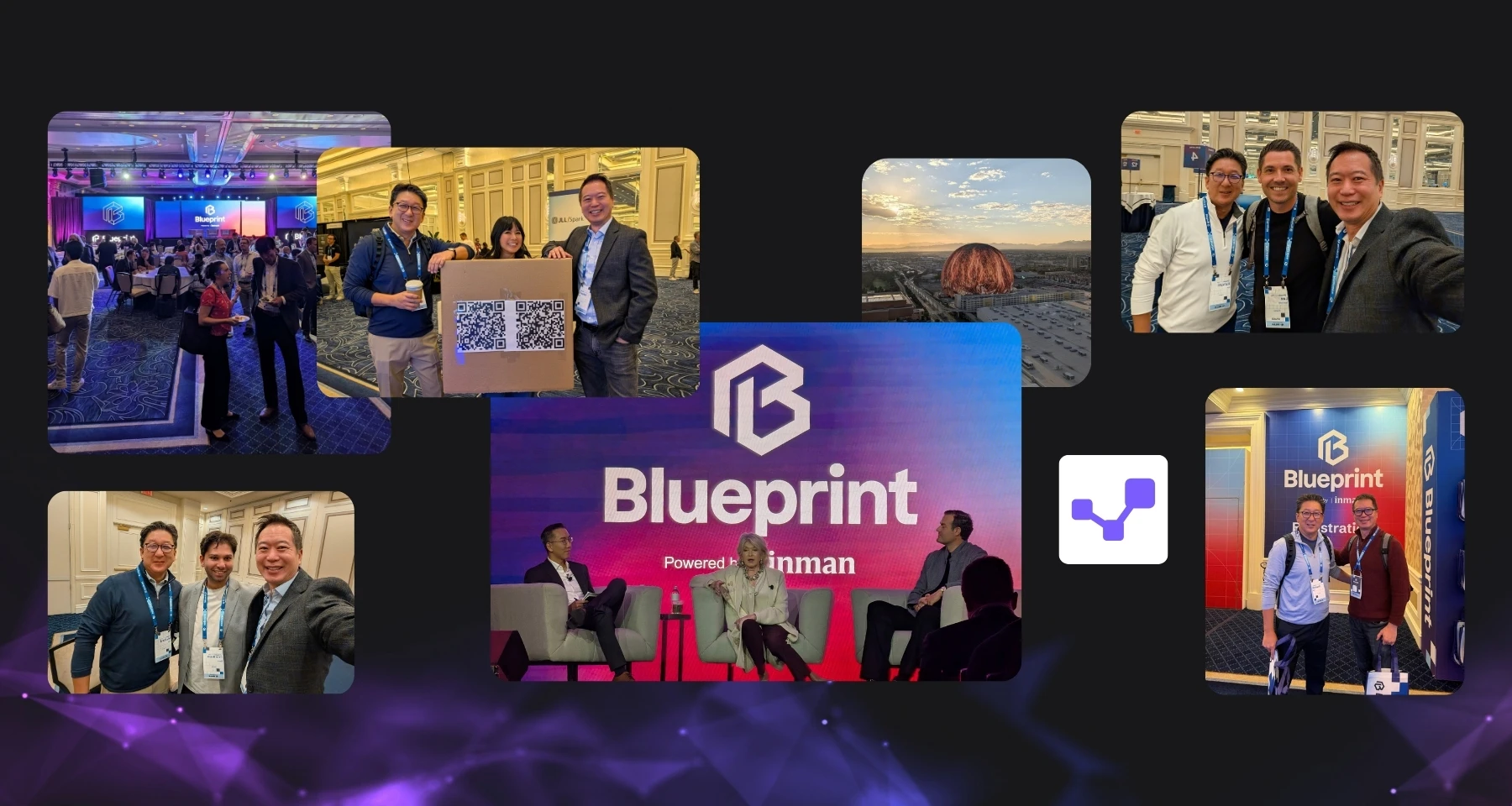
AI was central to conversations at Blueprint Las Vegas, September 22–24, 2026. Across the event, the questions we heard were becoming more practical: where can AI make work easier, how should teams evaluate it, and what does it take to use it across a portfolio?
Vynes CEO Richard Kim and CTO Chester Kuei spent the week connecting with owners, operators, prospective customers, partners, and investors. They demonstrated ADR Pro, exchanged ideas with fellow builders, and heard how organizations are weighing new technology against the realities of their workflows.
The energy was high, but what stayed with us was the growing focus on execution. Here are the perspectives and takeaways we are bringing home.
.jpeg)
Perspectives from Martha Stewart and Brian Kelly
Martha Stewart joined Brian Kelly, founder of The Points Guy, for a main-stage conversation on AI and the future of home management. The session connected her experience helping people live better at home with the possibilities of AI through Hint.
For us, this offered a useful reminder: technology becomes meaningful when it helps people manage something they already care about.
That principle carries into commercial real estate. A tenant coordinator may be looking for a clearer way to work through design submissions. A project manager may need to identify an unresolved requirement before it holds up the next stage. A landlord may want greater consistency across properties.
Our takeaway is that the starting point should be the task and the person responsible for it. Understanding their decisions, constraints, and expectations helps turn a technical capability into something useful.
Andy Power and Brendan Wallace on the infrastructure behind AI
Andy Power, CEO and President of Digital Realty, joined Brendan Wallace of Fifth Wall for Powering the AI Boom. Their session examined the opportunities and constraints surrounding digital infrastructure, including land, power, and capital.
It brought a physical dimension to the AI conversation. The technologies changing how people work also depend on real estate, infrastructure, and investment.
For Vynes, the connection is that innovation must work within real operating conditions. At the tenant delivery level, those conditions include property requirements, document quality, design constraints, and coordination between teams.
Our interpretation is that successful adoption requires attention to both the technology and the environment in which it will be used. An impressive capability needs a workable path into daily operations.
Useful AI starts with a specific operational problem
One of the strongest themes in our conversations was the need to be clear about what a tool improves.
For property teams, that means asking concrete questions. Does it reduce repetitive work? Does it help someone find relevant information sooner? Does it make review findings easier to understand and act on?
Our conversations about design review reinforced how much can be learned directly from the people doing the work. A demonstration creates an opening, but the most useful feedback comes when someone connects the product to a task they handle regularly.
Showing ADR Pro gave Richard and Chester opportunities to have those discussions and learn where our approach resonates, what teams need to evaluate, and how the workflow could develop.

Moving from a pilot to a portfolio takes confidence
Another takeaway was that a promising pilot is one step in adoption. Broader use requires teams to understand how the tool fits their processes and how they will assess its outputs.
For AI-assisted design review, our view is that findings need to be easy to inspect, connected to their sources, and open to refinement by the people responsible for the review.
As use expands across a portfolio, consistency matters too. Different properties can have different requirements, while teams still need a dependable way to organize information and manage review comments.
This is an area we continue to focus on: helping teams use AI within a structured workflow that supports their expertise and judgment.
Bringing the conversations back to Vynes
Blueprint gave us fresh ideas, valuable connections, and opportunities to explore potential customer relationships and partnerships.
It also strengthened our conviction that industry experience and technology development need to work closely together. The people managing tenant delivery understand where time is lost, where information becomes unclear, and what makes a review useful.
Our key takeaway: The next step for AI in commercial real estate is to earn its place in everyday work. For Vynes, that means continuing to listen, learn, and improve the processes that help retail partners move from a signed lease to an open store.
Thank you to the Blueprint team and everyone who made time to connect with us.

