
AI-powered plan review is quickly becoming a category of its own. New tools are emerging to help teams check drawings faster, identify issues and automate work that has traditionally required hours of manual review.
But while these solutions may look similar on the surface, they aren't necessarily solving the same problem.
For commercial real estate owners and operators, reviewing a tenant submission requires more than understanding what appears on a drawing. It requires understanding the property, the landlord's requirements and the wider context surrounding that submission.
Going Beyond What's on the Drawing

Many emerging AI plan-review tools focus on areas such as building-code compliance, clash detection, dimensions, quantities and general construction QA/QC. These are valuable applications of AI, but they represent only part of the review process for commercial real estate.
A landlord needs to understand something different: Does this tenant's proposed design work within the requirements and constraints of this particular asset?
Answering that question means looking beyond the drawing itself.
Understanding the Requirements Behind the Review
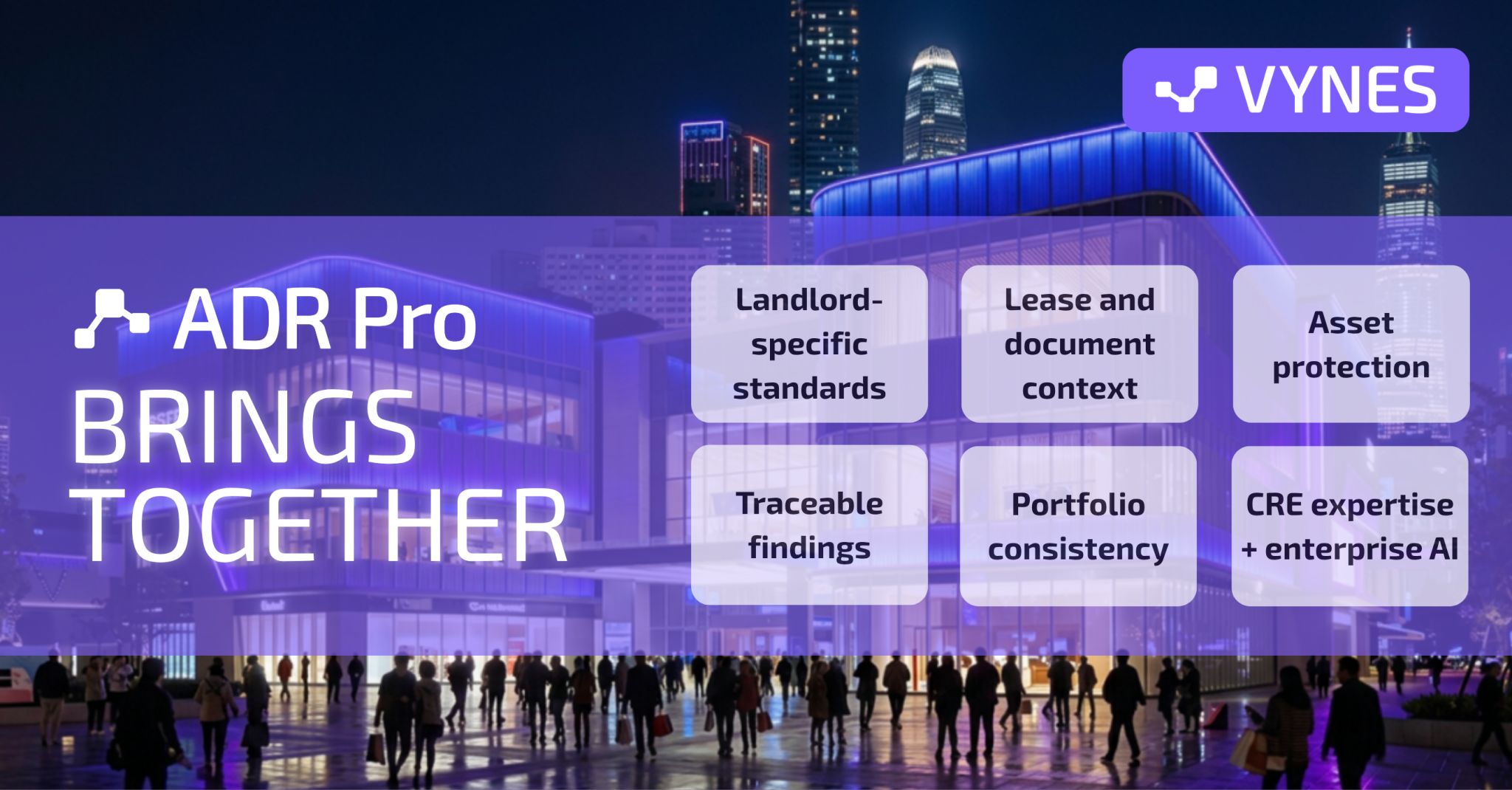
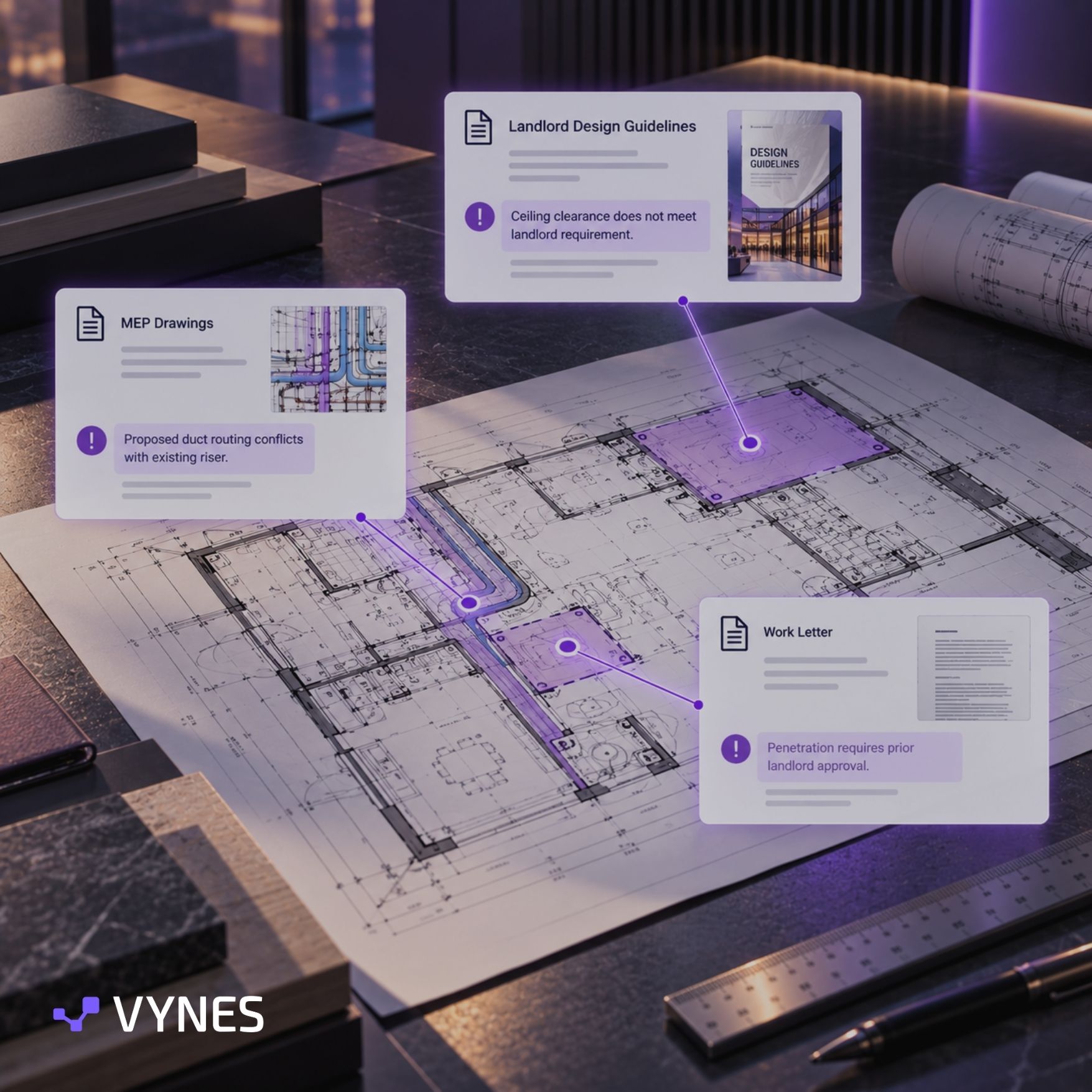
ADR Pro was built specifically around this challenge. It brings together landlord-specific design criteria with the wider documentation that informs each review, including LODs, work letters, MEP drawings, guidelines and supporting documents.
This context allows the review to consider not just what has been drawn, but what matters to the property. Analysis within the leased unit can help identify issues that may affect utilities, structural elements, roof or slab penetrations, landlord work and other building systems.
The result is a review grounded in the requirements of the actual asset rather than a generic set of checks.
From Finding Issues to Producing Actionable Findings
Identifying a potential issue is only useful if teams can understand why it matters and act on it.
ADR Pro creates traceable findings, connecting comments and markups back to the source requirements behind them. This gives property teams greater context for each finding while helping create a clearer review process for everyone involved.
It also enables owners and operators to apply consistent review standards across properties, submissions and teams — an important consideration when design review is happening across an entire portfolio.
CRE Expertise Meets Enterprise AI
Ultimately, the competitive advantage of AI plan review isn't simply finding more noncompliant items on a drawing.
It's building a system that understands what matters to the landlord, the tenant and the asset — and can turn that understanding into meaningful, actionable review comments.
That's the approach behind ADR Pro: combining decades of commercial real estate expertise with enterprise AI designed for complex CRE workflows.
As AI plan review continues to evolve, that depth of context may become one of the most important distinctions between tools that simply review drawings and those that truly understand commercial real estate.

